Takeover Surveillance: How NDAUWU Fellows Used Cultural Organizing to Resist State Surveillance & Social Control in Texas Schools
The No DATA About Us Without Us Fellowship: An Afrofuturist Storytelling Project
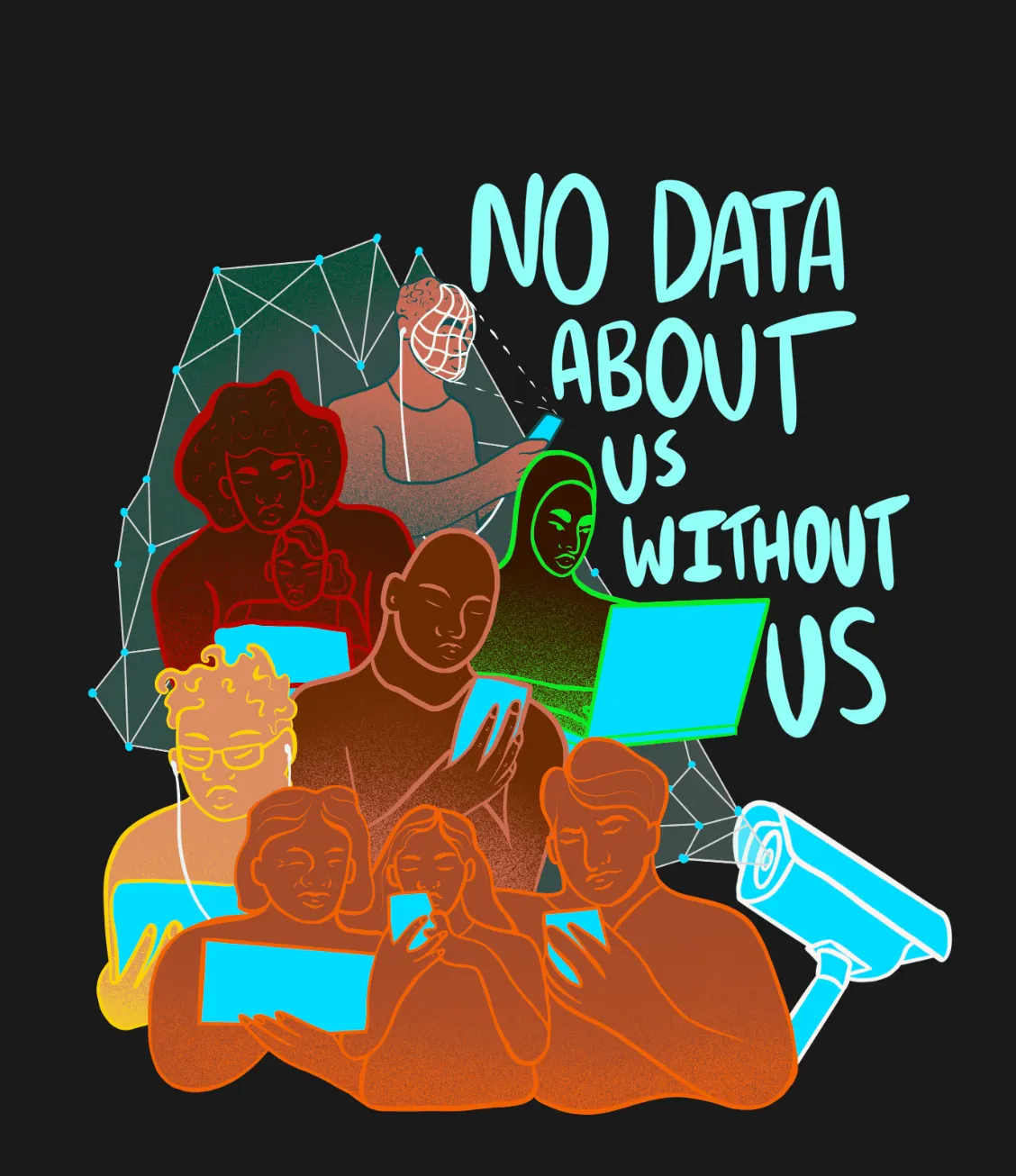
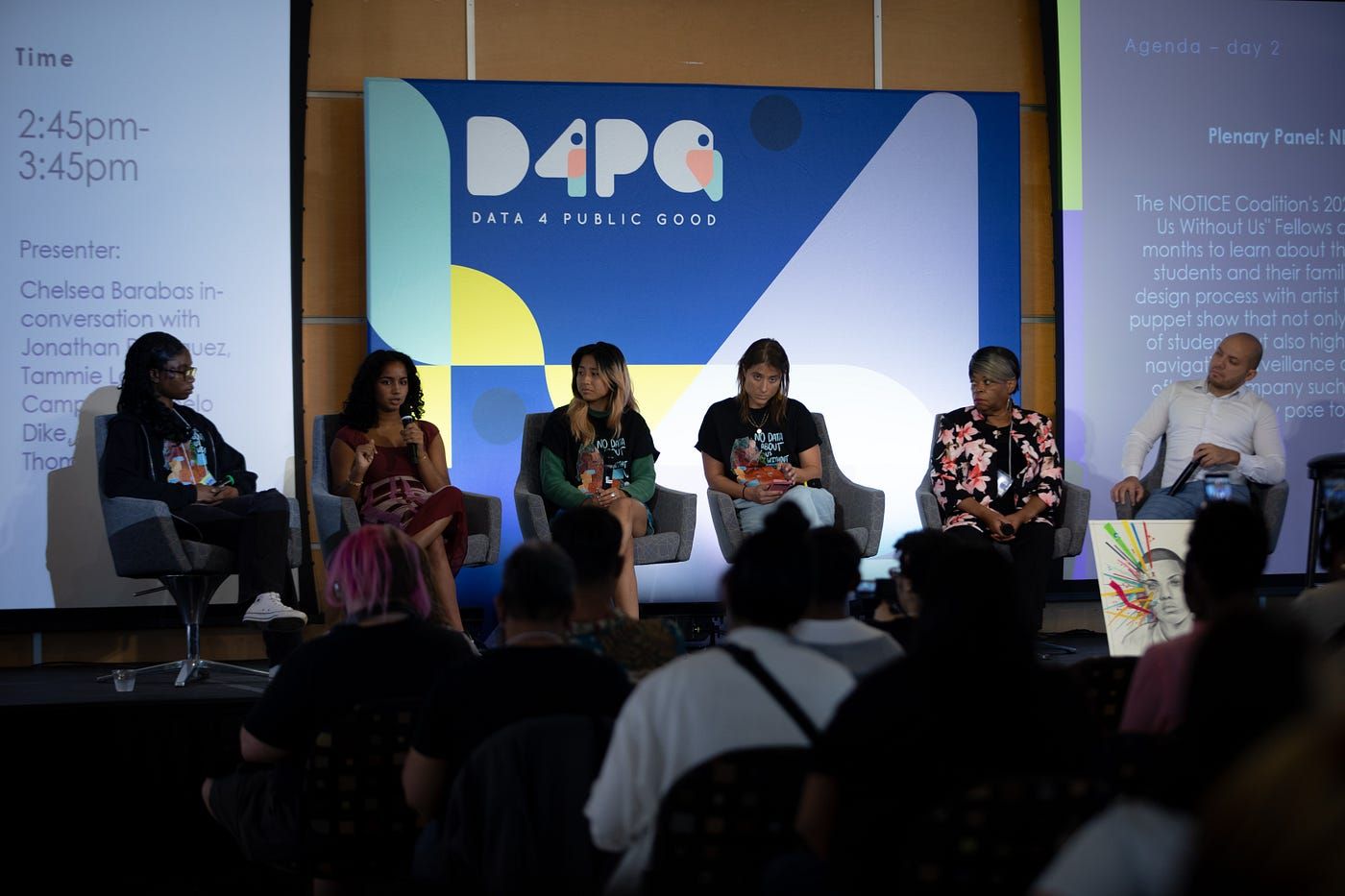
This essay is part of a storytelling project sharing the lessons and visions that emerged from the 2024–2025 No Data About Us Without Us Fellowship hosted by the NOTICE Coalition & the Edgelands Institute.
Big Brother is Bigger in Texas
When the state of Texas took control over the Houston Independent School District in 2023, the changes arrived quickly. Libraries were emptied of books and converted into “discipline centers.” Rows of desks replaced reading corners. Librarians were laid off. Fresh indentations in the carpet evidence of the weight of books removed–a physical reminder for a child that this was the room where they first met Junie B. Jones and Dr. Seuss.
Thousands of teachers were terminated or fled the district. Housing assistance programs for students were shuttered. Special education programs were defunded. Zero-tolerance discipline policies were reinstituted.
Cameras appeared in classrooms to ensure lessons stayed on script and “disruptive” students could be swiftly removed. These changes reflected a broader movement reshaping classrooms throughout the state.
Across Texas, school boards and legislators expanded their reach into curricula, policing not only behavior but imagination — deciding which histories could be told, which questions could be asked, and which futures could be imagined.
For students like high-school junior Christianna Thomas, the transformation was immediate and disorienting. Extracurricular activities like debate lost funding, teachers second-guessed what they could assign, and entire conversations about race or gender suddenly felt dangerous.
Across the city, Jeremy Eugene, a teacher in the neighboring Cypress-Fairbanks Independent School District, was watching a parallel struggle unfold.
In May 2024, the district’s board of trustees voted to omit thirteen chapters from core textbooks — removing material on climate change, vaccines, cultural diversity, and human impact on the environment.
Jeremy saw how these decisions further hollowed out the classroom. Through his work with Community Voices for Public Education, he stood alongside HISD teachers resisting similar challenges under the state takeover, recognizing that both districts were being reshaped by the same logic: fear of complexity, fear of dissent.
The state’s takeover of HISD is one of the most elaborate public experiments in surveillance and social control in modern American history. It reflects an evolution of carcerality in public education and the dystopian trajectories of policing schools. These developments make it clear that our communities need more bold and imaginative strategies to resist carcerality and preserve the possibility of youth justice in the digital age.
At the same moment when Texas schools were closing their libraries and silencing dissent, Christianna and Jeremy were opening something else entirely: fugitive spaces of collective learning, imagination, and care. The No Data About Us Without Us Fellowship became the place where their paths converged — and where both began to imagine more expansive ways to respond.
Two Starting Points — Early Days of Fellowship
The NDAUWU Fellowship is a race and digital justice field-building program for youth justice advocates.
During six months of extensive training and individual coaching, fellows engage with their cohort to design a project aimed at seeding community-level infrastructures that respond to AI injustice and algorithmic oppression.
In the early weeks of the No Data About Us Without Us fellowship, Christianna formulated an ambitious plan: a large-scale survey to capture how teachers and students felt about the Houston school takeover. It made sense. Christianna was not new to advocacy; as the Programs Director at SEAT (Students Engaged in Advancing Texas), a movement of young people working to make students visible in policymaking — “nothing about us, without us.”
Before joining the fellowship, Christianna had collaborated on research with the Edgelands and NOTICE team, examining how web-filtering software restricts access to information in Texas public schools. That work had given her an unusually deep understanding of youth digital rights and the technologies shaping daily life in classrooms.
In many ways, Christianna entered the fellowship with the most extensive knowledge on youth digital rights — already placing pressure on the tenuous boundaries between educator and teacher.
Designing a survey felt like a natural extension of her training: an evidence-based way to quantify the takeover’s impact and give students’ experiences political weight.
In the world of youth policy, Christianna observed that numbers opened doors that stories could not. “To be taken seriously, you need numbers,” she explained. She wanted to generate the kind of evidence that could compel lawmakers and school officials to act — data that might prove what students already knew in their bones.
But turning experience into statistics proved harder than expected. Teachers were reluctant to speak; the stakes felt too high.
Even when they did, their answers came wrapped in caution, shaped by fear of retaliation.
As Christianna refined her survey questions, she began to feel the limits of the form itself. The structure that was supposed to give her credibility also constrained what could be said. Each checkbox and rating scale flattened the texture of people’s lives.

Jeremy entered the fellowship from the opposite end of the system.
As a classroom teacher, he had long struggled with what he called a “crisis of imagination.” His students, he said, carried a sharp awareness that “humans ran the world into the ground,” and felt little reason to believe things could change.
Technology, once promised as a bridge, now seemed to deepen their isolation. In a school culture obsessed with metrics and surveillance, even connection became suspect. Jeremy tried to push back — encouraging creativity, empathy, and collective problem-solving — but the work often felt insurmountable.
“It just feels like the deck is really stacked,” he admitted.
Both he and Christianna were brimming with ideas, restless for change. Yet each faced a version of the same constraint: a system that measured everything except meaning. For one, the limits came in the language of data; for the other, in the routines of discipline. The real question wasn’t what project to pursue — it was what kind of politics could meet the moment.
The Fellowship as Turning Point — Reimagining Method
When the No Data About Us Without Us fellowship began, each participant was expected to design an independent project — something they could carry out within their own communities over the six-month duration of the program. But the fellows had other ideas.
Confronted with the scale of the crisis in Houston, they began to question whether individual projects could address a problem so deeply collective in nature.
What good was a single intervention when the very conditions they were studying — surveillance, censorship, and punitive control — thrived on isolation? They wanted to build something bigger than any one effort could hold.
This shift reshaped the fellowship itself. What began as a structure for individual research turned into a laboratory for collaboration, where fellows could test new methods of learning and organizing. Conversations that had started as coaching sessions soon became open-ended exchanges about strategy, imagination, and care.
The question that guided those dialogues was deceptively simple: What if the goal isn’t to measure harm, but to make sense of it together?
As those discussions unfolded, both Jeremy and Christianna began to recognize the limits of their original approaches. For Christianna, the survey’s logic of quantification began to give way to curiosity about stories — about how people actually experienced surveillance and discipline in their daily lives.
For Jeremy, cultural organizing started to feel like the connective tissue he had been missing as a teacher. Where data and policy once seemed like the only way to make change, imagination itself began to emerge as a form of resistance.
Their shift mirrored a deeper transformation within the cohort. The fellows’ collective insistence on working together expanded what counted as legitimate advocacy. Art, performance, and storytelling were no longer side projects — they became the method.
In a fellowship devoted to digital justice, this was the truest kind of innovation: reimagining not the technology, but the relationships through which knowledge and power could flow.
.png)
Building the Puppet Show — Reconstituting the Classroom
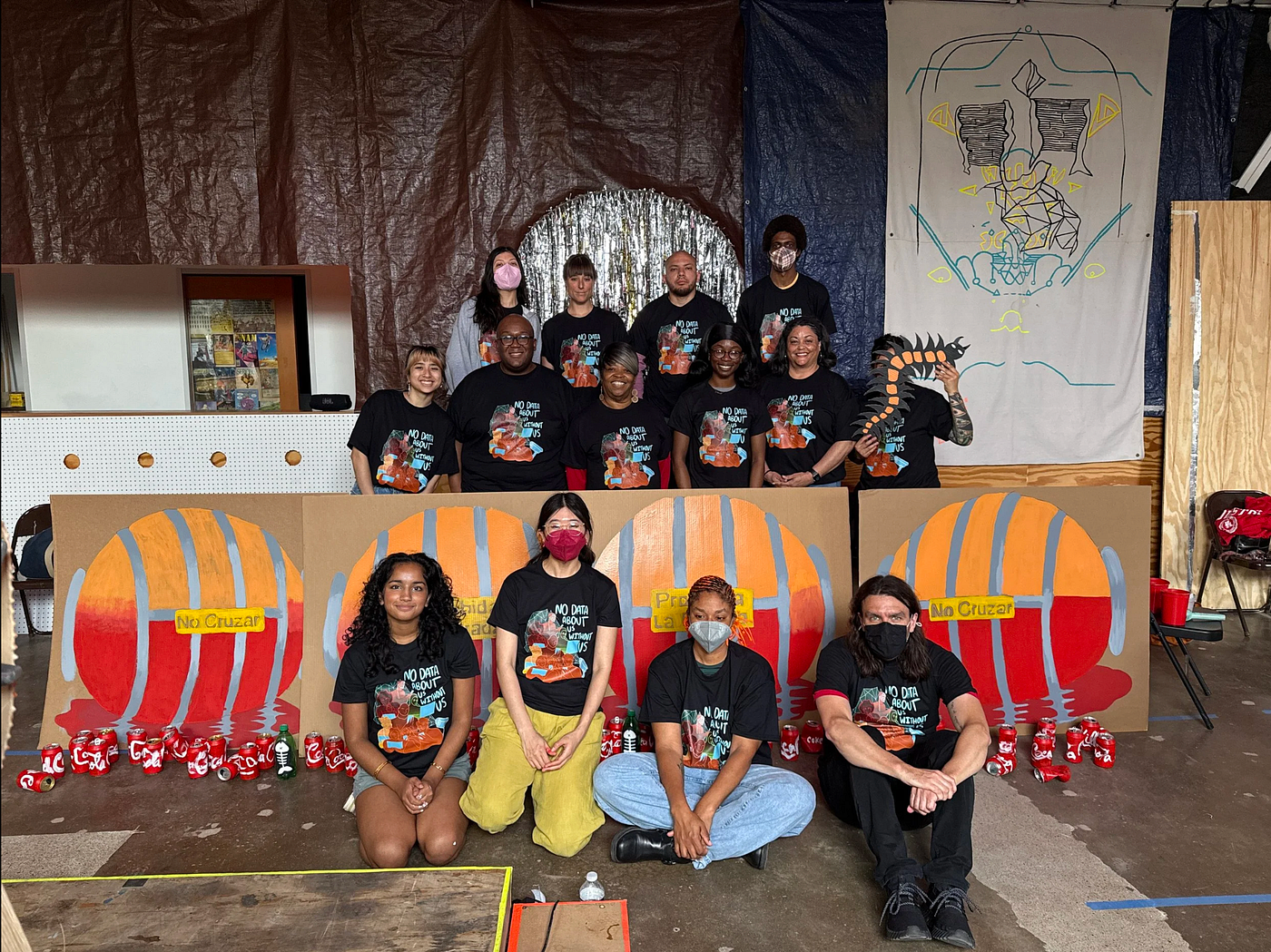
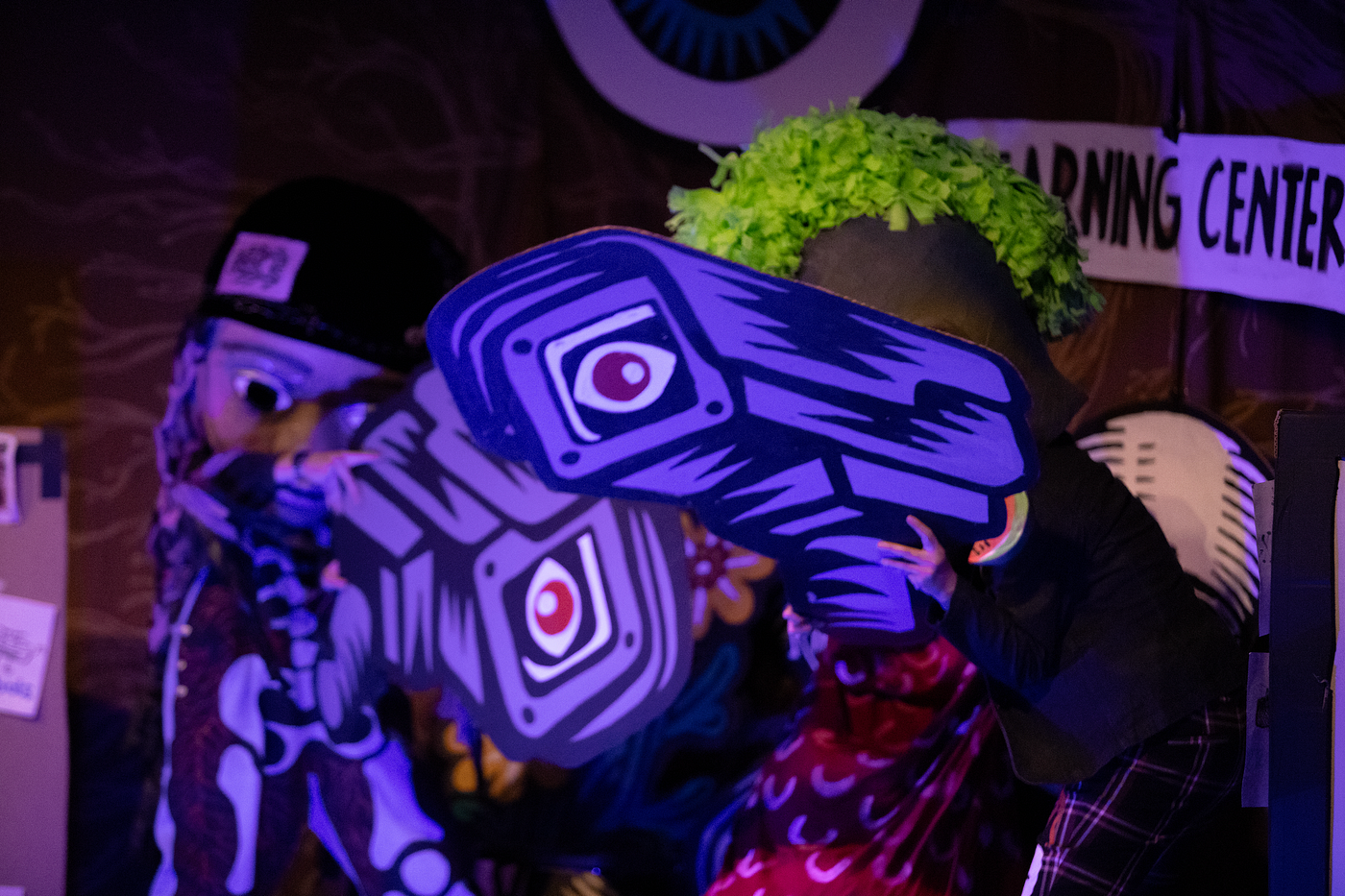
Out of those collective conversations, a new idea began to take shape. Under the creative stewardship of KillJoy, a fellow from the Kitchen Table Puppet and Press Collective, the team began to lay out a plan to make the show possible.
Each week, they gathered across Houston to piece together a storyline, props, characters, and design. Christianna’s insights, gained from surveys of educators and conversations with fellow students, offered rich details that began to bring the story to life. Jeremy’s experience as a poet and performer made him a natural fit to join the cast.
The Puppet Show pushed beyond the time boundaries of the fellowship. Kitchen Table emphasizes an approach to cultural organizing that embraces art as a community practice.
For them, how art is made is just as important as what art is made. For the Puppet Show crew, this meant inviting people to art build days where neighbors work together to bring art to life. The art builds featured music, food, and community workshops.
Christianna took on the role of an educator, leading the participants through the findings of her research and sharing the findings from her surveys and conversations with students and teachers about youth surveillance and the HISD takeover. Meanwhile, Jeremy and the team of adults listened to Christianna’s insights, which directly shaped the characters and narratives at the heart of the play.
The roles of teacher and student were inverted in this makeshift people’s classroom.
At one community art build, Christianna stood before a group of adults — teachers, neighbors, artists — sharing what she and her peers had experienced inside Houston’s schools.
Many were shocked by what she described: the cameras in classrooms, the microphones in bathrooms, the disciplinary policies that punished curiosity as defiance.
Jeremy drew inspiration from these stories, taking notes that would later become lines of dialogue in the play. In these exchanges, the roles they had brought into the fellowship began to blur. The student became teacher; the teacher became student.
Making space for creativity allowed a fugitive classroom to emerge — a space outside public school classrooms, enabling liberatory possibilities. Fugitive spaces are necessary under dystopian regimes because they offer momentary refuge necessary to incubate new futures despite oppressive social conditions.
The Digital Dystopia play and community art builds provided a space for fellows and their co-creators/audiences to make sense of their oppressive conditions and envision alternative paths forward.

By the time the puppets came to life onstage, what had started as a creative experiment had become something larger: a reconstitution of the public classroom itself. Our fellows modeled the practice of reconstitution — an idea advanced by Afrofuturist legal scholars. Reconstitution can be understood as “breaking down and reorganizing; disorienting and reorienting; it means opening up and expanding frames of theory and politics.”
In other words, storytelling can be a space to creatively disassemble unjust political and legal realities and rearrange facts into just, alternative futures.
Christianna and Jeremy took the material conditions of surveillance and social control, exposed their dystopian logics to recast a new, collective vision for the possibility of youth liberation in the digital age.
Their work invited the community to imagine schools not as sites of control but as spaces of collective authorship — where everyone, regardless of role or age, could participate in building the future.
It wasn’t just a puppet show. It was an act of reconstitution — the rebuilding of a classroom that could hold grief, creativity, and resistance all at once.
Reflection and Aftermath — New Pedagogies of Resistance
The puppet show marked a turning point, but it was not an ending. For both Christianna and Jeremy, it became the foundation for new ways of teaching, organizing, and imagining change.
After the fellowship, Christianna helped launch a new youth fellowship through SEAT, mentoring student organizers from across Texas.
She carried forward what she had learned through NDAUWU — that advocacy is not only about evidence or outrage, but about cultivating spaces where young people can think together about the futures they want. Her workshops blurred the lines between research and storytelling, between political education and creative practice. She had become, in her own way, a teacher.
Jeremy, meanwhile, returned to his classroom newly attuned to the possibilities of art as resistance.
He is newly inspired to weave performance and poetry into his lessons, helping students find language for the unease they felt living under constant surveillance.
The work was quiet, sometimes invisible, but transformative all the same: a reminder that liberation can begin with the smallest act of imagination.
And their work has continued, even months after the fellowship has officially ended. For example, as part of her new fellowship program, Christianna gave a virtual workshop on youth surveillance. During her presentation, one student pressed her with increasingly skeptical questions about her characterization of vape detection technology and a recent law, which requires any student caught vaping to be automatically placed in a Disciplinary Alternative Education Program (DAEP). Christianna responded patiently, emphasizing prevention and care over punishment.
When the student’s mother appeared on camera, it became clear why the exchange had turned tense: the woman had been a major champion of the state’s zero-tolerance vaping law.
Christianna held her ground, insisting that we had to expand our imagined solutions beyond punishment. What the legislator and her daughter didn’t realize was that they had stepped into Christianna’s classroom — a space built through years of collective struggle and reimagining.
The fellowship had begun as an experiment in digital justice but ended as a lesson in pedagogy: how to teach, learn, and organize in the face of control.
Jeremy and Christianna’s work reminds us that the classroom is not a place but a practice — one that can travel wherever care and imagination meet.
.png)
.jpg)